Wildfires
& The Ecological Concepts of Disturbance and Succession

Nadia Froese
EDUC 6101 - Fundamentals of Sustainability for Educators
Cape Breton University
Masters of Education in Sustainability, Creativity and Innovation
2025
I invite you for a moment to think about wildfires. What impressions come up when you hear that word? Which thoughts, feelings, and associations do you have? For most people, wildfires are scary. They cause destruction to homes and families, pollute our air and contribute to loss. Every year more and more people are directly impacted by fires that burn forests on every continent except for Antartica (Wellcome, 2025). Their violent and immediate damage has become symbolic for a different, slower kind of destruction: the warming of the earth due to climate change.
So would it surprise you if I told you that a major contributing factor to how out-of-control fires are currently is actually fire suppression (TED, 2017)? For settlers raised and educated in what is colonially called Canada and the United States, this may sound counter-intuitive, and not without reason. For about the last century, the North American public has been taught to fear ALL fire (WildCenter, 2025). Good forest management meant suppressing EVERY fire and prohibited anyone from starting any fires in the forest (Copes-Gerbitz et al., 2022). Many Indigenous communities in North America were legally forbidden from practicing fire stewardship and cultural burns, ways they had been managing and maintaining the health of the forests for ages (Copes-Gerbitz et al., 2022). What Western science failed to recognize in the early 1900s was that small and frequent fires are necessary in order to clear debris and avoid too much density (TED, 2017), and they even contribute to an ecosystem's diversity (McEvoy, 2004). This, combined with rising temperatures and invasive species that were brought over on colonial ships, has contributed to the intensity of wildfires we experience in North America today (Wellcome, 2025).
In order to better understand this phenomenon, we will spend some time exploring the ecological concepts of disturbance and succession. This science can help us to better understand why small fires are necessary. We will then consider the impact of human interference: where it went badly wrong, and what we now must do. Human interference that doesn't take these ecological processes into account, no matter how well-intentioned, is contributing more harm than good (McEvoy, 2004). It is important to note that the "discoveries" that are now just being made within Western science is knowledge that many Indigenous communities have had for a very long time (Christianson et. al, n.d.).
What Is Ecological Succession?
Succession is an ecological process in which certain species of plants are replaced by other species of plants as an ecosystem continues to evolve (McEvoy, 2004). An ecosystem is a community of species that interact with one another (BD Editors, 2017). The process of succession is somewhat predictable (Emery, 2010) and scientists have identified certain "stages" that an ecosystem goes through as it become colonized by plant species (Witynski, n.d.).
THE TWO TYPES OF SUCCESSION
There are two types of succession:
Primary Succession
Primary succession begins with bare rock in an area where there has been no previous plant life (BD Editors, 2017). Tiny organisms, as well as erosion, break down the rock into soil (BD Editors, 2017). The presence of soil then allows for plant life to begin to colonize the area (BD Editors, 2017). As long as there are no disturbances, the process of succession will continue until the area reaches a climax community (BD Editors, 2017).
Secondary Succession
Secondary succession occurs when the landscape has been disturbed (for example, by a fire) (BD Editors, 2017). While a disturbance does cause damage to plant life, as long as the disturbance has not been so severe as to kill all of the living organisms in the soil, secondary succession will take place (BD Editors, 2017). A difference to primary succession is that this process occurs much quicker than primary succession as living organisms in the soil are already present (Witynski, n.d.). It also contributes to the diversity of species within a landscape as the species that enter the ecosystem may not necessarily be the same species that were there previously (BD Editors, 2017).
STAGES OF SUCCESSION
As an ecosystem evolves, the species that colonize it continue to change. This process can be somewhat predictable (McEvoy, 2004). Species create conditions in which other species may grow, or die (TED-Ed, 2016). This can depend on many factors including light and shade (TED-Ed, 2016). Many species have evolved to expect disturbance and therefore rely on occasional disturbance to thrive (McEvoy, 2004). Below is a basic succession trajectory.
Pioneer Species
Pioneer species are the first to appear in an area previously devoid of plant life (BD Editors, 2017). Examples of pioneer species include lichen and moss (Karen Sottosanti, n.d.). They are able to contribute to the formation of soil by breaking down rocks, and also help to germinate the soil (BD Editors, 2017). They can reproduce quickly and survive harsh conditions, but do not survive for long and require a lot of sunlight, which contributes to their disappearance as soon as taller species of plants arrive (Karen Sottosanti, n.d.).

Midsuccessional species
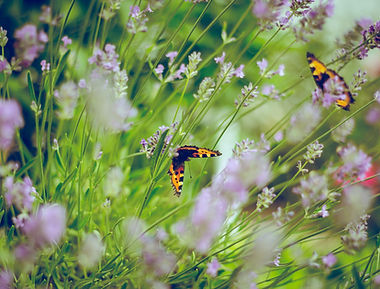
Midsuccessional species include grasses and shrubs (Valerie, 2022). Imagine a meadow with a few trees: this would be an example of an ecosystem in the middle of it's process of succession. Plants at this successional stage are mostly competing for sunlight (Rogers, 2018).
Climax Communities
A community of species has reached a climax when the process of succession has finished and, unless disturbed, the composition of species will continue to remain stable and no longer be replaced by other species (Nix, 2019). Imagine a forest.

BRIEF HISTORICAL CONTEXT
The first scholar to document succession within Western ecology was Henry Cowles in the year 1899 (Emery, 2010). He observed and documented the changing vegetation occurring on sand dunes (Emery, 2010). Then, in the early 1900s, Frederick Clements suggested that the process of succession always resulted in a climax (Emery, 2010). He believed that the climax of a specific ecosystem always consisted of the same vegetation (Emery, 2010). For example, if a fire disturbed a forest of oak trees, then the successional process would lead again to there being a forest of oak trees (Emery, 2010). Another scholar, Henry Gleason, disagreed with Clements' claim and argued that there was no such thing as a climax community as he proposed every ecosystem to be unique (Emery, 2010). At the time, his critique was not received well (Emery, 2010). Ecologist Eugene Odum's perspectives on succession, detailed in his paper The Strategy of Ecosystem Development, published in 1969, influenced a generation of ecologists to believe that it was highly important to protect climax ecosystems, and that the best way to do so was to prevent disturbances from occurring (Christensen, 2014).
Presently, scholars understand succession to be less predictable than what Clements proposed (Emery, 2020). Exactly how predictable it is is up for debate, as well as whether or not a community can reach a true climax (Nix, 2019). Norman L. Christensen Jr writes in his paper "A historical perspective on forest succession and its relevance to ecosystem restoration and conservation practice in North America" that "The search for a grand unified theory of succession apart from other kinds of ecosystem change is futile" (Christensen, 2014, Abstract). "We now understand that there is no single unique or unifying mechanism for successional change, that successional trajectories are highly varied and rarely deterministic, and that succession has no specific endpoint (Christensen, 2014, Abstract)".
What Is A Disturbance?
A disturbance is an event that disrupts an ecosystem, for example a fire (Valerie, 2022). A disturbance can have varying effects on an ecosystem depending on it's severity (BD Editors, 2017). A major fire that destroys all life, including the organisms present in the soil, will cause that land to have to undergo primary succession once again (BD Editors, 2017). A smaller fire that clears brush and debris from the floor will have minimal longterm negative impact on the forest. In fact, a minor disturbance makes space for new species to enter the ecosystem and different levels of succession to occur once again, contributing to the ecosystem's diversity (McEvoy, 2004).

What happens when humans interfere?
"THE BIG BURN" AND SMOKEY BEAR
In 1910, 87 people in the United States lost their lives to a huge wildfire that stretched all of the way from eastern Washington to western Montana (TED, 2017). The destruction it caused scared people and influenced the way they felt towards fire (TED, 2017). Treating fire as the enemy, the United States Forest Service launched a campaign called Smokey Bear in order to educate people about the dangers of wildfires (WildCenter, 2025). This campaign deeply influenced the way that the North American public felt towards fire (WildCenter, 2025).
ERASURE OF INDIGENOUS PEOPLES AND THEIR CULTURES, BRITISH COLUMBIA'S 1874 BUSH FIRE ACT
The colonization of what is colonially called Canada and the United States by European settlers caused the erasure of Indigenous peoples and their cultures and traditions (WildCenter, 2025). For a very long time Indigenous peoples managed the land with fire, and the vegetation evolved to expect fire (FNESS, 2020). Then colonizers forced the assimilation of Indigenous peoples into Western culture by banning their cultural practices, separating children from their families and forbidding them to speak their own languages (Copes-Gerbitz et al., 2022).
In 1874, the British Columbia government "sought progress by denying the benefits of First Nations’ fire stewardship in colonial documents" (Copes-Gerbitz et al., 2022, p. 48). The new worldview that the colonists brought with them was one that sought ways they could capitalize off of the land (WildCenter, 2025). Timber was seen as a valuable resource, and the new government outlawed any fires that didn't have a permit, banning the practice of cultural burns previously practiced by Indigenous peoples (Copes-Gerbitz et al., 2022).
Watch This Video
In the video on the left, forest ecologist Paul Hessberg claims that the recent destruction caused by wildfires could have been avoided had North American forests been managed better, most significantly had we not engaged in fire suppression (TED, 2017). He warns that unless forest management policies and habits are updated, we will continue to lose our forests to avoidable and destructive wildfires (TED, 2017).
Sustainable Approaches to Forest Management
ACKNOWLEDGEMENT OF THE CYCLE OF DISTURBANCE AND SUCCESSION
Published in 2004, Thom J. McEvoy's Positive Impact Forestry: A Sustainable Approach to Managing Woodlands explains the importance of disturbances and that they contribute towards healthy ecosystems (McEvoy, 2004). Many plant species have evolved in order to rely on disturbance to continue germinating their seeds (McEvoy, 2004). For example, the jack pine has adapted to fire by growing a cone that can only open in very hot temperatures (McEvoy, 2004). McEvoy writes that it is respect for the cycles of disturbance and succession that lead to good forest management and that "those who make decisions need to acknowledge that the true value of any forest ecosystem is something that far exceeds the sum its parts" (McEvoy, 2004, p. 53).
RELATIONSHIP TO FIRE
In the video on the right, Jade Haumann gives a talk on Indigenous perspectives on forest fire. She considers the history as well as present day relationship that many Indigenous communities have to fire. Central to her discussion is the idea that it is relationship that guides the practices of Indigenous fire stewardship (WildCenter, 2025).
CULTURAL BURNS
Dr Nicole Redvers provides insights into the practice of cultural burning in this interview with host Alicia Wainwright. She outlines the ways that modern management practices have lead to increased fires, and distinguishes the way in which Indigenous communities, who are typically living closest to nature, are also most affected by these fires. She describes the Indigenous practice of cultural burns, and highlights Indigenous Nations' diversity and therefore the fact that the practice of cultural burns can vary across Nations. She also makes the distinction between prescribed burns and cultural burns. While prescribed burns are often managed by the Western government, and contain strict guidelines outlining the way the burn will proceed and the people permitted to take part, cultural burns are family events occurring within a community, have deep cultural significance, and are often cool, safe burns. She explains the importance of taking clues from the land on when burning is appropriate. Importantly, she describes the fire of a cultural burn as a fire that doesn't need to be feared (Wellcome, 2025).

--
It is necessary for people, most specifically people educated within Western society, to move away from the idea that all fire must be feared. As Jade Haumann outlines, Indigenous people have lived in relationship to fire for a very time and have so much to thank it for (WildCenter, 2025). Think for a moment about what wouldn't be possible if people didn't have fire. As Paul Hessberg highlights, it is vital that the way we manage our forests shifts if we want to decrease wildfires (TED, 2017). However, climate change as well as the colonization of what is colonially known as Canada and the United States have altered the landscape in such a way that it isn't possible to simply return to the ways the land was managed prior to colonization (Christianson et. al., 2014). Instead, people must work together and listen to experts and knowledge keepers (FNESS, 2020). There are many people who have vital knowledge, and are doing important research and work on this urgent topic. Below is a list of resources to delve into for further reading:
Further Reading: Annotated Bibliography
Christianson, A.C., Caverley, N., Diabo, D.A., Ellsworth, K., Highway, B., Joe, J., Joudry, S., L’Hirondelle, L., Skead, W., Vandevord, M. & Ault, R.(n.d.) Blazing the Trail: Celebrating Indigenous Fire Stewardship. FireSmart Canada.
Blazing the Trail: Celebrating Indigenous Fire Stewardship is a booklet put together by a team of experts on fire stewardship and funded by Alberta Agriculture and Forestry and FireSmart Canada. It contains a collection of stories and information about Indigenous fire stewardship in what is now called Canada, with the goal of providing important insights for Indigenous leaders of all levels across Canada, as well as allies that work alongside Indigenous communities. These stories and texts cover topics such as fire creation (the origin story of fire), fire stewardship and resilience, the harmonizing of Indigenous and non-Indigenous knowledges, fire as medicine and healing of the land through fire stewardship, innovative learning strategies for using fire on the land and emergency procedures and stories about Indigenous firefighters, among other topics. The insights and strategies provided dispense valuable information and knowledge at a time where Indigenous communities are often the most affected by wildfires.
Access it here.
FNESS. (2020, May 5). Indigenous Cultural Burning - Shackan [Video]. Youtube.
In the video Indigenous Cultural Burning - Shackan, Traditional Burning Knowledge Keeper Joe Gilchrist, Shackan Indian Band Chief Jordan Joe, Shackan Indian Band Professional Forester and Fire Chief Lennard Joe, and First Nations' Emergency Service Society Forest Fuel Management Specialist Peter Hisch speak to the history of cultural burning and the history that took the knowledge away. They deliver a message of hope as they outline the ways in which the Shackan Band and the BC Wildfire Service are working together to facilitate cultural burns once again on their land. Joe Gilchrist outlines their goal of passing on the knowledge by collecting knowledge from elders and passing it down to younger generations in an effort to take back the land and make it safer again. This video is an example of a local community reclaiming their traditional practice of managing forests through cultural burns, as well as of positive collaboration between Indigenous and non-Indigenous communities. It is highly relevant as it demonstrates a community taking action, hopefully inspiring others to do the same. Watch it here.
McEvoy, T.J. (2004). Positive Impact Forestry: A Sustainable Approach to Managing Woodlands. Island Press.
Thom J McEvoy's book Positive Impact Forestry offers a comprehensive guide of sustainable forest management. A central argument of the book is that it is possible to manage forests in such a way that they are not just experiencing little impact from the humans that are managing them, but rather that they experience positive impact. It is impossible to take humans out of the equation, says McEvoy, but the intention of the humans managing the forests is vital to the forest's health. He claims that the most beneficial outlook to have is one that views the forest itself as the most valuable thing in the equation, as opposed to whatever monetary gain that can be obtained from the timber. Among other things McEvoy explains succession in depth, adding nuance to the brief outline of succession included in this blog, and highlights the importance of disturbance. Thom J McEvoy is a professor emeritus at the University of Vermont.
Access it here.
Copes-Gerbitz, K., Hagerman, S.M. & Daniels, L.D. Transforming fire governance in British Columbia, Canada: an emerging vision for coexisting with fire. Reg Environ Change 22, 48 (2022). https://doi.org/10.1007/s10113-022-01895-2
Kelsey Copes-Gerbitz, Shannon M. Hagerman and Lori D. Daniels co-author the article "Transforming fire governance in British Columbia, Canada: an emerging vision for coexisting with fire" published in Volume 22, Article 48 of Regional Environmental Change. The authors researched the history of fire governance within the Canadian province of British Columbia from the 1800s until 2020 and interviewed fire experts. They approached the research with the understanding that past management choices have led to increased destruction and with the goal of uncovering a new way forward. What they detailed as missing from current fire governance as a result of their research and interviews was the community's agency and inclusion in the management practices being performed on their own land. However they see opposing viewpoints of the forestry industry and fire keepers, as well as the need for reconciliation between Indigenous communities and the BC government, as obstacles still standing in the way. This article is relevant as it provides a more localized report on a history of fire governance which can feel more relevant for people living there. As a current resident of BC, it felt important for me to include, as it is history specific to the land I am occupying and encouraged me to reflect on my own (up until now limited) knowledge of fire management practices.
Access it here.
Guardian News. (2021, August 20). The climate science behind wildfires: why are they getting worse? [Video]. Youtube
The Guardian's video The climate science behind wildfires: why are they getting worse? provides helpful scientific context to better understand the combination of factors that have led to the severity of forest fires increasing year after year. The Guardian's global environmental editor, Jonathan Watts, covers additional information to that gone over in this blog, such as the effects of monocultures, which are crops or planted forests of trees that all contain one species. This absence of diversity, as opposed to the many species found within an ecosystem, can catch fire much easier and burn must more drastically. Additionally, moisture in the atmosphere and in the ground can prevent fire severity and it's absence can contribute to greater fires. Watts suggests measures such as reducing carbon emissions and re-thinking the way that we plant crops as steps we can take to reduce the risk of high-intensity wildfires. He notes that although there are now less fires globally than there were before, their intensity is like never before and we here on earth are in a state of emergency.
Watch it here.
References
BD Editors. (2017, January 31). Ecological Succession. https://biologydictionary.net/ecological-succession/
Christensen, N. L. (2014). An historical perspective on forest succession and its relevance to ecosystem restoration and conservation practice in North America. Forest Ecology and Management, 330, 312–322. https://doi.org/10.1016/j.foreco.2014.07.026
Christianson, A.C., Caverley, N., Diabo, D.A., Ellsworth, K., Highway, B., Joe, J., Joudry, S., L’Hirondelle, L., Skead, W., Vandevord, M. & Ault, R.(n.d.) Blazing the Trail: Celebrating Indigenous Fire Stewardship. FireSmart Canada.
Copes-Gerbitz, K., Hagerman, S.M. & Daniels, L.D. (2022). Transforming fire governance in British Columbia, Canada: an emerging vision for coexisting with fire. Reg Environ Change 22 (48). https://doi.org/10.1007/s10113-022-01895-2
Emery, S. (2010) Succession: A Closer Look. Nature Education Knowledge 3(10):45. https://www.nature.com/scitable/knowledge/library/succession-a-closer-look-13256638/
FNESS. (2020, May 5). Indigenous Cultural Burning - Shackan [Video]. Youtube. https://www.youtube.com/watch?v=zWge9APm6Uw
McEvoy, T.J. (2004). Positive Impact Forestry: A Sustainable Approach to Managing Woodlands. Island Press.
Nix, S. (2019, September 29). The Development of a Climax Community: ...and the confusion surrounding a climax forest. Treehugger. https://www.treehugger.com/the-development-of-a-climax-community-4110904.
Rogers, G. (2018, November 16). Middle Aged Meadows and the Middle-Loving Plants. Treasure Coast Natives: Facts about flora found in our part of Florida. https://treasurecoastnatives.wordpress.com/2018/11/16/middle-aged-meadows-and-the-middle-loving-plants/
Sottosanti, K. (2023, May 4). Pioneer species. Encyclopedia Britannica. https://www.britannica.com/science/pioneer-species
TED. (2017, November 29). Why wildfires have gotten worse -- and what we can do about it | Paul Hessburg [Video]. Youtube. https://www.youtube.com/watch?v=O6Vayv9FCLM
TED-Ed. (2016, February 2). Why certain naturally occurring wildfires are necessary - Jim Schulz [Video]. Youtube. https://www.youtube.com/watch?v=cNVZEVq3KzY&t=91s
Valerie. (2022, October 6). Disturbance and succession: examples of ecological disturbances, and the role of wildfire in ecosystems! Wild Earth Lab: Environmental Science Education and Art. https://wildearthlab.com/2022/10/06/disturbance-and-succession/
Wellcome. (2025, April 1). Cultural burning: could traditional practices prevent modern wildfires? | Wellcome [Video]. Youtube. https://www.youtube.com/watch?v=sTcjrZCFWgY&t=129s
WildCenter. (2025, August 27). Indigenous Perspectives on Forest Fire - Jade Haumann [Video]. Youtube. https://www.youtube.com/watch?v=rPlkO2FQ5Y8
Witynsky, Max (n.d.). Ecological Succession, Explained. UChicago Explainer Series. The University of Chicago. https://news.uchicago.edu/explainer/what-is-ecological-succession
Photos are from WIX's free photo gallery with no references required.